
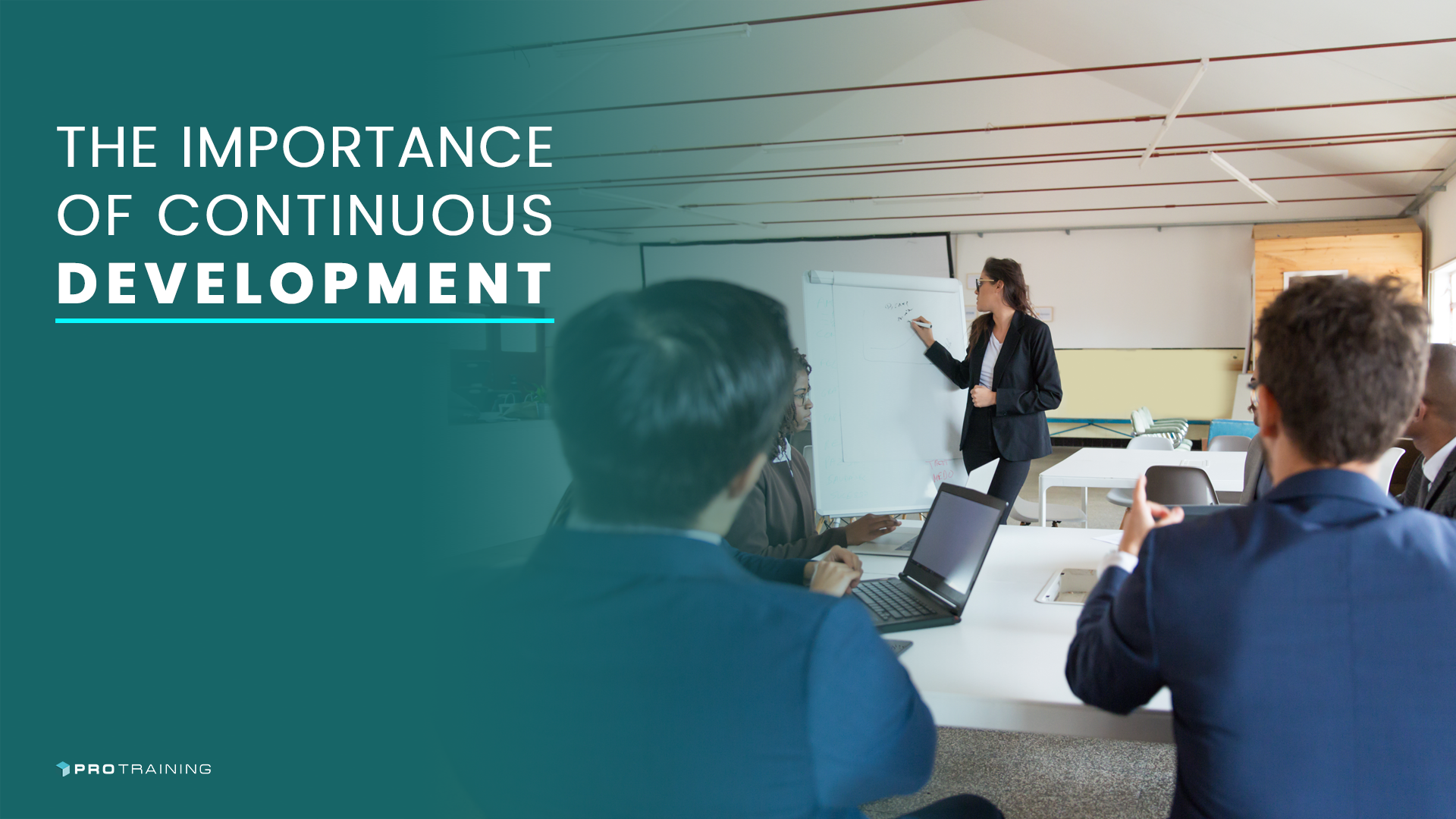
The Importance of Continuous Development
No matter how experienced and effective a sales team is, there are increasing reasons for development.
Old habits die hard, and long-established sales practices must be re-evaluated, and sales teams rewired to continue driving new initiatives, services and products that will ultimately lead to increased sales.
There is a well-known saying: “If we do what we always did, we will get what we always got
It’s about stepping out of comfort zones, foreseeing the inevitable, and embracing new expectations. Individuals CAN learn new skills to navigate, drive and accelerate new strategies and methodologies and be agile in the face of change.
In a robust marketplace, employing top sales performers can be challenging, and finding the right cultural ‘fit’ for an organisation can take time and money.
Building a culture of continuous development is more a design problem than a delivery problem — which is why colleagues like Helen Roxburgh, one of our learning design consultants, spend so much time on the architecture of learning programmes rather than just the content of individual sessions.
What if your company can’t keep hiring their way to continued growth?
According to Forbes: “In an era where revenue organizations can’t grow their numerator (capacity) with more sales reps, they must improve their denominator (conversion) by focusing on the ones they have”
Employees must be valued and motivated to succeed and embrace the opportunity to learn and evolve. Investing in the well-being and development of employees leads to boosted morale, motivation, satisfaction, and the will to succeed.
Such an investment in people retains top talent and increases retention, not just revenue.
“Companies that provide extensive sales training experience a 19% increase in sales revenue compared to those that don’t” Source : https://blog.gitnux.com/
PROTRAINING recognises that different people learn differently; a breadth of sales training solutions is the best approach and provides a more holistic learning experience.
Optimising efficiency using fun and experiential training solutions, such as creating role-play scenarios and Discovery-based learning activities, can enable a salesperson to practice many different situations in a safe and secure environment. Using these approaches to build a world-class sales team, increases the time an organisation needs to focus on other essential aspects of the business.
Organisations, however, need to provide ongoing reinforcement to create behavioural change. Sales leaders need to provide effective feedback and coaching around the newly learned behaviours, to help them to identify areas for improvement and work on strategies to increase sales.
Continuous development scales only when you have internal trainers who can actually run a session — not just deliver content. Our train-the-trainer programme covering group training techniques builds the facilitation, design and assessment skills your internal experts need to convert their know-how into learning experiences that stick across the wider organisation.