

The 7 Habits of Effective Leaders Inspired by The 7 Habits of Highly Effective People is no longer an optional development theme for modern organisations. It is a direct driver of performance, culture, and execution quality. In fast moving markets, leadership maturity can determine whether teams stay aligned under pressure or drift into confusion and inconsistency.
This article explains the core ideas, practical applications, and implementation strategy for the 7 habits of effective leaders inspired by the 7 habits of highly effective people in the Dubai context. It is designed for decision makers, HR leaders, L and D teams, and business heads who want visible capability improvement, not generic training activity.
Translating the seven habits into leadership behaviour
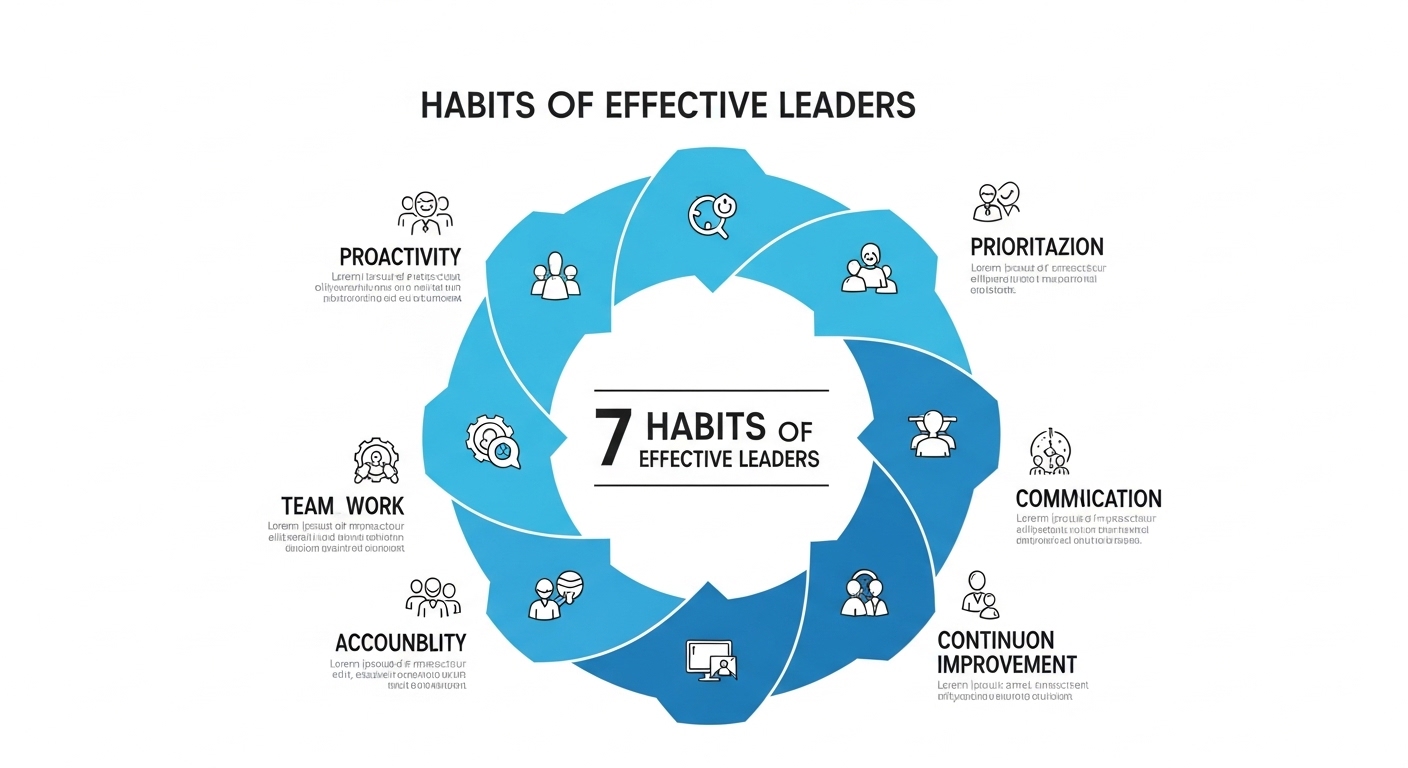
The seven habits framework can be mapped directly to leadership execution. Being proactive supports ownership culture. Beginning with the end in mind improves strategic clarity. Putting first things first strengthens execution discipline. Thinking win win improves stakeholder alignment. Seeking first to understand improves trust. Synergy enhances collaboration. Sharpening the saw supports sustainable performance.
Making the framework practical for teams
Leaders need concrete application routines. This includes weekly priority planning, stakeholder mapping, structured one to one conversations, and reflection checkpoints. Training should convert each habit into observable management behaviour.
Why this topic matters for organisations in Dubai and the UAE
Leadership quality is now one of the strongest predictors of whether strategy turns into results. Most businesses in Dubai operate in high speed, multicultural, and target driven environments. In this context, leadership is not only about authority. It is about clarity, communication, decision quality, and trust. When those capabilities are weak, teams slow down, service quality drops, and execution becomes inconsistent.
Common capability gaps leaders face
Many organisations discover similar patterns across business units. Managers can be technically competent yet still struggle with people leadership, difficult conversations, delegation, and coaching. Senior leaders often face pressure around change leadership, cross functional alignment, and execution discipline. Without structured development, these gaps compound over time.

What high quality leadership training should include
A practical leadership programme should begin with role based capability diagnosis, then move into scenario based learning, live practice, feedback loops, and follow through plans. Participants should not only learn concepts. They should practise decision making, communication, and team leadership behaviours in realistic situations.
Strong programmes usually include:
- clear capability frameworks
- role relevant case scenarios
- behavioural practice and reflection
- manager accountability mechanisms
- post training reinforcement plans
How PROTRAINING approaches leadership development
PROTRAINING focuses on practical leadership capability that can be applied immediately in the workplace. The emphasis is on behavioural transfer, not classroom completion. Programmes are designed for real organisational contexts in Dubai and the wider UAE, where leaders need to guide diverse teams, maintain momentum, and deliver measurable outcomes.
The training model combines structured facilitation, practical tools, scenario discussion, and implementation planning. This helps participants convert learning into daily leadership actions.
The principles of effective leadership habits are widely applied across different professional development programmes. Many organisations integrate these habits into specialised initiatives such as Womens Leadership Training Programmes in Dubai, where participants learn to apply structured leadership behaviours in real workplace situations. These habits support long-term growth by improving time management, collaboration, and goal alignment among emerging and experienced leaders.
Implementation guidance for HR and L and D teams
Before launching a leadership programme, define the business outcomes clearly. Decide which leadership behaviours need to improve, where current performance is weakest, and how results will be measured. Build a baseline and agree checkpoints at thirty, sixty, and ninety days after training.
Recommended implementation sequence:
- Conduct leadership capability mapping by role tier.
- Prioritise the top five performance critical behaviour gaps.
- Run targeted training cohorts with role specific design.
- Add reinforcement through line manager check ins.
- Measure behaviour and performance indicators quarterly.
Mistakes to avoid
Organisations often reduce leadership training impact by selecting generic programmes, overloading participants with theory, and skipping reinforcement. Another common issue is using one curriculum for all levels. Effective leadership development requires context, progression, and practical follow through.
Final recommendation
Leadership capability is now a business performance lever, not only a people development activity. Organisations that invest in practical, role specific, and measurable leadership development build stronger teams and better execution consistency.
For organisations in Dubai looking to improve leadership quality in a meaningful way, PROTRAINING offers a practical and business aligned path.
Next step for organisations in Dubai
If your organisation wants stronger leadership outcomes, begin with a capability assessment and then run focused training aligned to role level and business priorities. Avoid generic programmes. Build practical development pathways with reinforcement and measurable outcomes.
PROTRAINING can support this with tailored leadership development programmes built for real organisational needs in Dubai and the UAE.